Key Takeaways
- Both pickleball and tennis support healthy ageing, but pickleball may be easier on joints while still improving cardiovascular fitness.
- Tennis provides higher-intensity exercise that may deliver stronger cardiovascular and bone-density benefits over time.
- The “best” choice for longevity is the one you enjoy and can play consistently without injury.
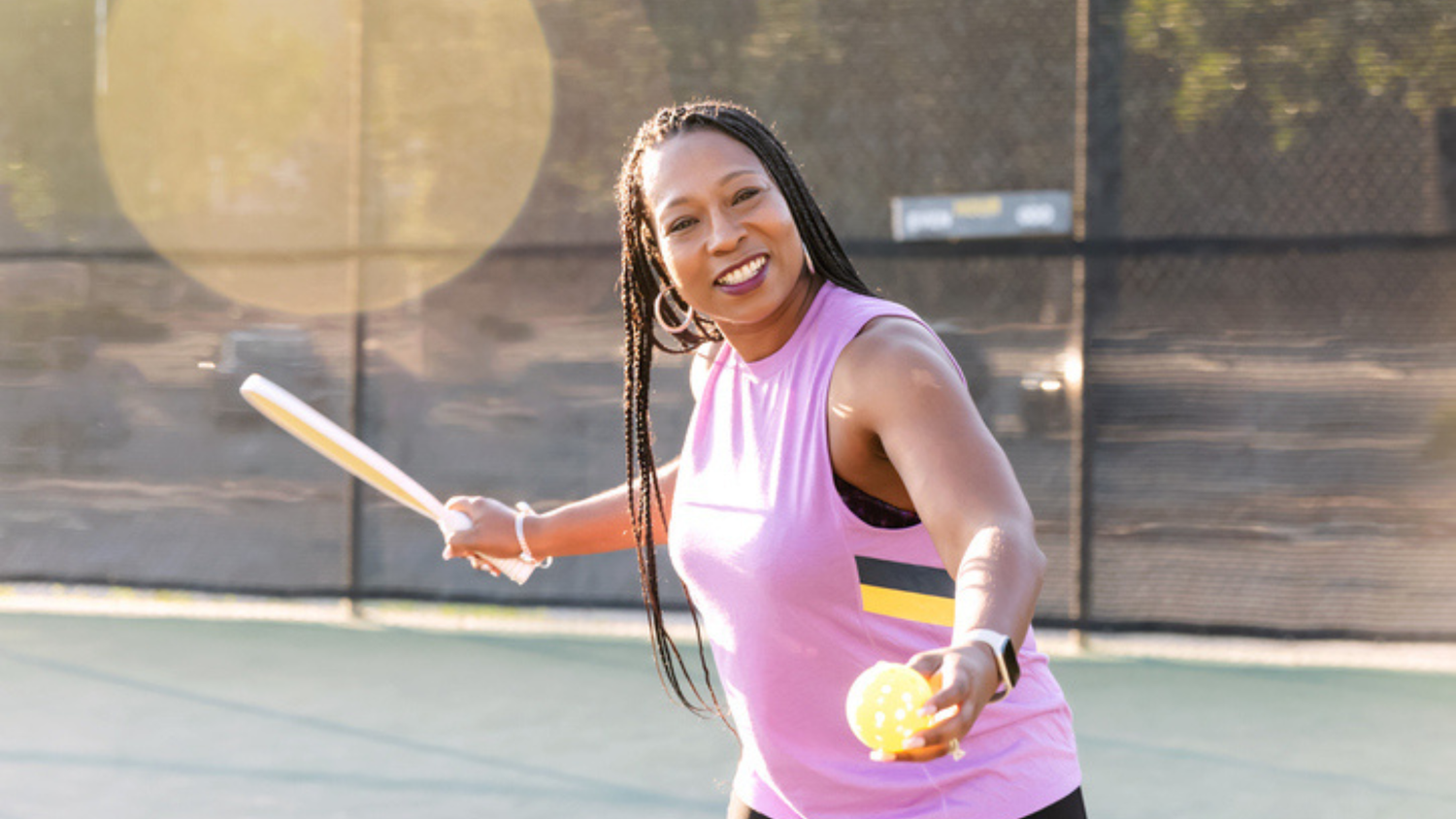
Did you know that racquet sports are among the most powerful activities linked to longevity? A large cohort study published in the British Journal of Sports Medicine found that people who played racquet sports lived significantly longer than those who did not (R).
That means your choice between pickleball and tennis is not just about fun, it is about shaping your long-term health in a meaningful way. Let’s explore how each sport supports healthy ageing so you can make the best choice for your body and lifestyle.
Pickleball vs tennis for longevity: understanding the movement patterns
Before comparing benefits, it helps to understand how each sport challenges your body. While both involve racquets, their biomechanics differ in ways that matter for ageing well. Pickleball is played on a smaller court, with shorter rallies and less sprinting. Movements are more controlled, with fewer abrupt directional changes. This reduces joint loading, particularly in the knees and hips.
Tennis, on the other hand, involves larger court coverage and more explosive movements. You accelerate, decelerate, and change direction rapidly, which increases cardiovascular demand and muscular engagement. Interestingly, research on ageing athletes shows that multidirectional movement improves neuromuscular coordination and balance, which are key for preventing falls (R). Both sports offer this benefit, but tennis does so at a higher intensity.

Cardiovascular health benefits: a win for both, with a twist
Let’s talk about your heart, because cardiovascular health is central to longevity. Tennis tends to provide a higher aerobic load due to longer court coverage and faster play. Studies show that higher-intensity physical activity is strongly associated with reduced cardiovascular mortality (R).
That said, pickleball still delivers meaningful cardiovascular benefits. Even moderate-intensity activity improves heart health and reduces risk factors like hypertension and insulin resistance. A study on older adults found that regular moderate exercise improves vascular function and overall cardiovascular resilience (R).
The twist? Sustainability matters more than intensity alone. If pickleball keeps you moving regularly without fatigue or injury, it may offer equal or greater long-term benefit simply because you stick with it.
Joint health and injury risk
As you age, protecting your joints becomes increasingly important. This is where pickleball often stands out. Because the court is smaller and movements are less explosive, pickleball places lower stress on joints. Reduced impact means less wear on cartilage, which is especially beneficial if you have existing joint sensitivity.
Tennis, while excellent for fitness, carries a higher risk of overuse injuries such as tendinopathies and joint strain. Research shows that repetitive high-impact activity can increase joint stress, particularly in ageing populations (R). That said, proper technique, strength training, and recovery can significantly reduce the risk of injury in tennis. It is not about avoiding intensity, but managing it wisely.

Bone strength and muscle health
Here’s where tennis offers a unique advantage. Weight-bearing, high-impact activities stimulate bone remodelling and improve bone mineral density. Tennis, with its jumping, sprinting, and rapid changes in direction, provides this stimulus effectively. A study published in Osteoporosis International found that racquet sports participants had significantly higher bone density than sedentary individuals (R). The higher impact of tennis likely amplifies this effect.
Pickleball still contributes to bone health, but its lower-impact nature means the stimulus is more modest. However, when combined with other weight-bearing activities, it still plays a valuable role in maintaining skeletal strength.
Cognitive health and coordination: both keep your brain sharp
One of the most uplifting aspects of racquet sports is their impact on your brain. Both pickleball and tennis require quick decision-making, hand-eye coordination, and anticipation. These cognitive demands stimulate neural pathways and support brain health.
Research shows that complex physical activities combining movement and strategy improve cognitive function and may help preserve mental sharpness with ageing (R). The social element adds another layer. Playing doubles, chatting between points, and engaging with others supports emotional wellbeing and cognitive resilience.
Social connection: the hidden longevity booster
Longevity is not just physical; it is social, too. Pickleball has gained popularity partly because it is highly social and accessible. Games are often played in doubles, with a welcoming and inclusive atmosphere. This encourages regular participation and connection.
Social engagement has been strongly linked to reduced mortality risk. A meta-analysis found that strong social relationships increase the likelihood of survival by 50% (R). Tennis also offers social benefits, especially in club settings. However, pickleball’s ease of entry may make it more appealing if you are looking to build connections quickly.
Which is better for longevity: pickleball or tennis?
So, which sport best supports longevity? The answer is refreshingly simple. Both are excellent, and your personal fit matters most. Pickleball may be the better choice if you prioritise joint comfort, ease of play, and consistent participation. Its lower impact makes it sustainable and enjoyable for many people as they age.
Tennis may offer greater benefits for cardiovascular fitness and bone strength, thanks to its higher intensity. If your body tolerates it well, it can be a powerful tool for long-term health. The most important factor is consistency. Research consistently shows that regular physical activity, regardless of type, is one of the strongest predictors of longevity (R).
If you are looking to deepen your understanding of how movement supports longevity, we invite you to explore more insights in our next blog: Study Uncovers How Much Exercise Is Needed To Age Better.