
The Short Answer
Yes. Research suggests dancing can support brain health and cognitive function as you age, including aspects of attention, memory and executive function. However, it is not clear that dancing is universally better than other forms of exercise. What makes dance particularly interesting is the combination of physical movement with continuous learning and coordination.
↓ Jump to
📖 6 min readDancing does something rather unusual: it asks your brain to coordinate movement, rhythm, memory, balance and sensory information at the same time. In brain-imaging research, months of dance training have even been associated with measurable structural changes in brain regions involved in movement, learning and memory. (R)
How Does Dancing Challenge Your Brain?
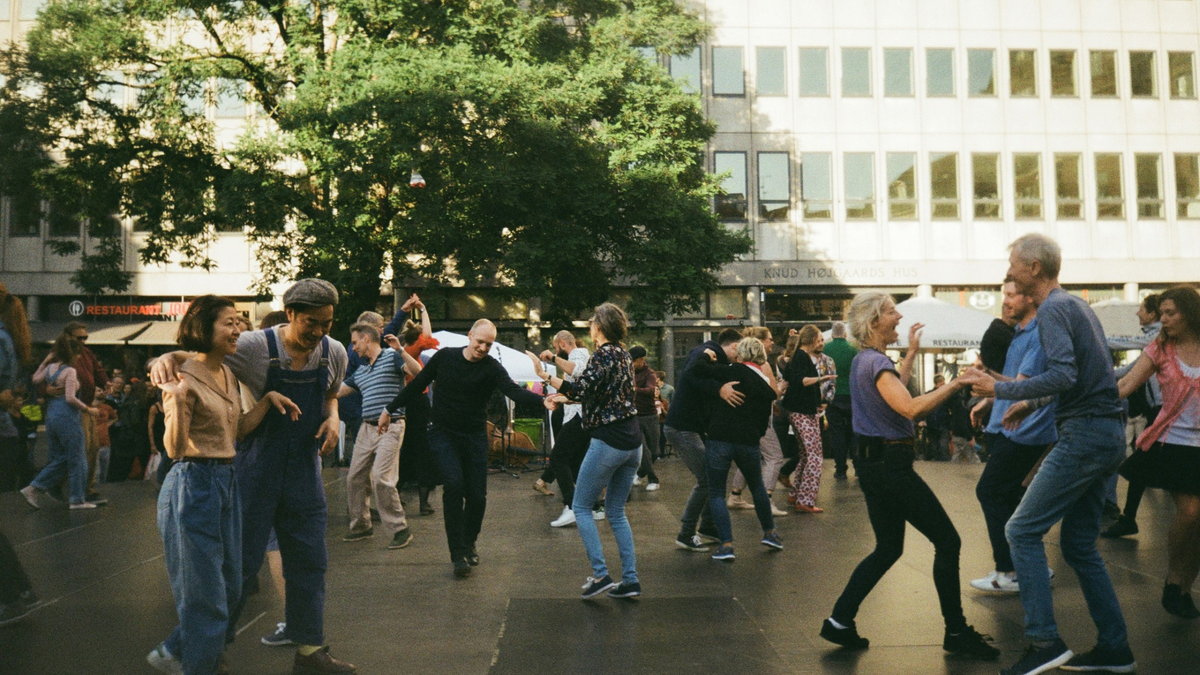
When you dance, your brain is doing considerably more than telling your feet where to go. You may be remembering a sequence, synchronising movements with music, adjusting your balance, responding to a partner and changing direction, sometimes within seconds.
This requires sensorimotor integration, the process through which your brain combines sensory information with movement. Dance draws on auditory, visual, vestibular and somatosensory information while requiring precise control of the body. (R)
Learning new steps also engages neuroplasticity, your brain’s ability to adapt its structure and function in response to experience. In an 18-month trial involving healthy adults aged 63 to 80, dance training that regularly introduced new choreography was associated with increases in grey matter volume in brain regions including the precentral and parahippocampal areas. (R)
Another study compared dance, walking and other activities in 174 adults aged 60 to 79. After six months, researchers found that white-matter integrity in the fornix, a bundle of nerve fibres connected with the hippocampal memory system, increased in the dance group while declining across the other intervention groups. (R)
There may also be a molecular component. Brain-derived neurotrophic factor (BDNF) is a protein involved in neuronal survival and neuroplasticity. In a 12-week randomised controlled trial of independently living older adults, dance participants showed higher serum BDNF levels than controls, alongside improvements in measures of attention and mental flexibility. (R) Together, these findings help explain why researchers are interested in dancing for brain health: your brain is simultaneously moving, sensing, predicting, remembering and learning.

What Has Recent Research Found About Dancing and Cognitive Function?
Recent evidence strengthens the case that regular dancing may support several aspects of cognition. A 2025 randomised controlled trial studied 50 adults aged 60 to 69. Participants who completed adapted tango classes for 60 minutes twice a week for 12 weeks improved on tests assessing attention, cognitive flexibility, working memory and global cognition compared with a usual-routine control group. (R)
The broader research points in a similar direction, although effects vary between studies. A meta-analysis of randomised trials involving 1,174 older adults found a statistically significant, but small, overall beneficial effect of dance interventions on cognition. (R)
Earlier pooled research involving 11 randomised controlled trials and 1,412 participants also found evidence of improvements in global cognition and learning and memory, although the strength of evidence differed between cognitive outcomes. (R)
What the Research Does and Doesn’t Show
This distinction matters. Dancing should not be viewed as a guaranteed way to improve every aspect of cognition. Rather, research suggests it is an engaging form of physical activity that may support several cognitive processes while also challenging coordination and balance.
Is Dancing Better for Your Brain Than Other Exercise?
In one 18-month study, both dance and conventional fitness training were associated with increases in parts of the hippocampus, a brain structure important for learning, memory and spatial navigation. The dancers showed additional volume increases in parts of the hippocampal formation and were the only group to show a significant improvement in the study’s overall balance score. (R)
However, direct comparisons do not consistently favour dance. An Australian randomised trial compared ballroom dancing with walking in community-dwelling older adults and did not find evidence that dancing was superior for executive function overall, although results suggested possible advantages for visuospatial memory among people who completed the intervention. (R)
Another 12-week trial comparing dance/movement training with aerobic exercise found improvements in cognitive scores across the active interventions, while improvements in cardiovascular fitness were specific to aerobic exercise. (R)
How Often Should You Dance for Brain Health?
There is no scientifically established perfect dose of dancing for brain health yet. Existing trials have used quite different programmes, so researchers cannot currently specify an optimal number of minutes or sessions.
In a systematic review of randomised controlled trials, dance programmes generally ranged from one to three sessions per week, with sessions lasting around 35 to 60 minutes and interventions continuing for three to 12 months. (R)
Importantly, benefits have been reported with achievable schedules. The recent adapted-tango trial used two 60-minute sessions each week for 12 weeks, (R) while another trial used three one-hour dance sessions each week for 12 weeks. (R)
Researchers are still working out whether dancing once, twice or three times per week makes a meaningful difference. A current randomised trial has been designed specifically to investigate this dose-response question, highlighting that the optimal frequency remains an open scientific question. (R)
For now, consistency may be a more useful goal than chasing a precise number. Choosing a style you enjoy and that suits your mobility, fitness and experience can make dance a sustainable part of an active lifestyle.

Frequently Asked Questions About Dancing and Brain Health
Does Dancing Improve Memory?
Research suggests dancing may support some forms of memory. Randomised-trial evidence has found improvements in learning and memory, while brain-imaging studies have reported changes in structures involved in memory processing after longer dance interventions. (R) (R)
Do You Need to Learn Complicated Dances?
No evidence suggests that you need advanced choreography to gain potential benefits. Research has used many styles, including ballroom dancing, tango and structured aerobic dance. What may be valuable is that you continue coordinating movement and, in many programmes, learning or adapting to new movement patterns. (R)
Is Dancing Good Exercise as You Get Older?
Yes, dancing can provide meaningful physical activity alongside its cognitive demands. Randomised trials in community-dwelling older adults have reported improvements in physical measures such as mobility, endurance and balance following dance programmes, although outcomes depend on the programme and comparison group. (R)
Can You Start Dancing Later in Life?
Absolutely. Many of the clinical trials investigating dance have specifically enrolled people in their 60s, 70s and beyond, including people without previous dance training. (R) The research is a useful reminder that your brain retains the capacity to respond to new physical and cognitive experiences throughout later life.
The Bottom Line
Dancing brings movement and learning together in a way few activities do. Whether you prefer ballroom, tango, folk dance or simply learning new steps, it can be an enjoyable way to add physical activity, coordination and cognitive challenge to your healthy ageing routine.
Continue exploring the science behind a healthy ageing brain: Your Comprehensive Guide to Brain Health