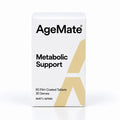


The Short Answer: NMN and NAD+ are different molecules. NMN, or nicotinamide mononucleotide, is an intermediate your cells can use to make NAD+, or nicotinamide adenine dinucleotide. NAD+ is a coenzyme used directly in cellular metabolism and other biochemical reactions. Human trials show that NMN can alter NAD-related metabolites, but this does not make NMN and NAD+ interchangeable. (R)
↓ Jump to
Estimated reading time: 8 minutes
One of the most interesting things about NAD+ is that your cells continually make, use and recycle it. Rather than being a simple “energy molecule”, NAD+ participates in chemical reactions that help cells transfer electrons and maintain normal metabolism. NMN sits earlier in this biochemical story as one of the molecules used to build NAD+. (R) That distinction is the key to understanding NMN vs NAD+. NMN is a precursor used in NAD+ biosynthesis, while NAD+ functions directly as a cellular coenzyme.
| Feature | NMN | NAD+ |
|---|---|---|
| Full name | Nicotinamide mononucleotide | Nicotinamide adenine dinucleotide |
| What it is | An NAD+ precursor | A cellular coenzyme |
| Main relationship | Used to make NAD+ | Used directly in cellular reactions |
| Relationship with NADH | Indirect | NAD+ is the oxidised partner of NADH |
| Human evidence | Several short-term trials | Extensive evidence for its biological role; supplementation is a separate question |
What exactly are NMN and NAD+?
You can think of NMN and NAD+ as occupying different positions in the same biochemical network. NMN is not another name for NAD+. It is a precursor, meaning it can be converted into NAD+ through an enzymatic reaction. The enzyme responsible is nicotinamide mononucleotide adenylyltransferase, usually shortened to NMNAT. Human NMNAT catalyses a key step in NAD synthesis, converting NMN into NAD+. (R)
In simplified form, the relationship looks like this:
NR → NMN → NAD+ ↔ NADH
NAD+ then participates directly in cellular reactions. The “+” matters because NAD+ is the oxidised form of the molecule, while NADH is its reduced form. Moving between NAD+ and NADH allows electrons to be transferred during metabolic reactions.
Is NAD the same thing as NAD+?
You will often see “NAD” used as convenient shorthand, but NAD+ and NADH describe chemically distinct redox states. Understanding that distinction makes terms such as NAD vs NMN, NAD+ vs NADH and NMN vs NAD+ much easier to interpret.
In metabolism, NAD+ can accept electrons and become NADH. NADH can subsequently donate electrons and return to the NAD+ state. This cycling is fundamental to the chemistry through which your cells process nutrients and support energy metabolism.
Human research also illustrates why measurements need to be precise. A 2021 study involving 205 adults found that total plasma NAD did not generally change with increasing age, while the NAD+/NADH ratio differed according to sex and age. (R)
How does NMN become NAD+ in your body?
The conversion is an enzyme-driven step rather than NMN and NAD+ simply being two names for the same substance. NMNAT transfers an adenylyl group to NMN, producing NAD+. Research characterising human NMNAT established its role as an enzyme essential to NAD synthesis. (R)
NMN itself can arise through more than one route in NAD+ metabolism. One important route involves recycling nicotinamide, a form of vitamin B3, through what scientists call the NAD+ salvage pathway. This recycling matters because NAD+ is continuously consumed and regenerated inside cells. So when you compare NMN or NAD+, you are really comparing a biosynthetic intermediate with one of the functional products of that pathway.

Does NMN increase NAD+ levels in humans?
Research suggests oral NMN can increase measured NAD+ or NAD-related metabolites under some experimental conditions, although the findings depend on the population, biological sample and study design. This distinction matters because a change in blood NAD+ does not automatically tell you what is occurring in every tissue.
In a randomised, double-blind trial of healthy Japanese men aged 65 or older, 250 mg of NMN daily for 12 weeks significantly increased whole-blood NAD+ and NAD+-related metabolites compared with baseline measurements. The researchers also assessed several measures of physical function, illustrating that biological markers and functional outcomes are separate questions. (R)
Another randomised trial involving 80 healthy middle-aged adults compared placebo with 300, 600 and 900 mg NMN daily for 60 days, with blood NAD concentration as its primary outcome. (R) These relatively short studies are useful pieces of human evidence, but more research is needed.
Explore more human clincal trials here.

Does NAD+ always decline as you get older?
The most scientifically accurate answer is not necessarily, and the result appears to depend on what you measure. Some human tissues have shown age-associated differences in NAD+, but it is too broad to assume that NAD+ inevitably falls throughout your entire body with age.
For example, a study of human skin samples reported an inverse relationship between tissue NAD+ concentration and age. (R) In contrast, a large 2026 investigation using seven independent human cohorts found that whole-blood NAD+ remained remarkably stable across age groups. (R)
That apparent difference is scientifically useful. NAD+ biology is tissue-specific, and blood measurements should not automatically be treated as a proxy for NAD+ throughout your body. The evidence therefore supports a more nuanced view of NAD+ and healthy ageing rather than the simple claim that everybody’s NAD+ inevitably declines with age.
What does human NMN research actually show?
Human studies are beginning to clarify what happens when NMN is investigated experimentally, but results should be interpreted according to the participants and outcomes actually studied.
A 10-week randomised controlled trial involving 25 postmenopausal women with prediabetes who were overweight or obese found increased insulin-stimulated glucose disposal in skeletal muscle after NMN, alongside changes in muscle insulin signalling. The findings applied to this specific group and did not establish the same effect across the general population. (R)
Other trials have investigated different endpoints. A 12-week study in healthy older men reported increased whole-blood NAD+ and some changes in measures of muscle performance. (R)
NMN vs NAD+: which is better?
There is no scientifically meaningful winner in NMN vs NAD+ because the two molecules perform different biological jobs. NMN is used within pathways that produce NAD+, while NAD+ functions directly as a coenzyme and redox molecule.
For you, the most useful conclusion is straightforward: NMN contributes to NAD+ biosynthesis; NAD+ is the molecule subsequently used in numerous cellular processes. Human research into this pathway is developing. Healthy ageing is rarely about a single molecule. Understanding pathways such as NAD+ metabolism can instead give you a clearer picture of the remarkable biological systems that continue supporting your cells throughout life.
Want to explore the science further? Continue with our comprehensive guide to NMN.