
The Short Answer
When buying an NMN supplement, look for β-NMN, transparent dosing, batch-specific laboratory testing, evidence of identity and purity, clear manufacturing information and appropriate packaging. Human studies show that oral NMN can increase blood NAD+, but research into broader healthy-ageing outcomes is still developing. (R) The best comparison starts with quality you can verify.
↓ Jump to
Estimated reading time: 9 minutes
- What is the most important thing to look for in an NMN supplement?
- Why should you look for a batch-specific Certificate of Analysis?
- What purity should you look for in NMN?
- Does more NMN mean better quality?
- What do human studies actually show about NMN?
- Why does manufacturing transparency matter?
- Does NMN packaging and storage matter?
- How can you tell if an NMN supplement is high quality?
- What should you look for when buying an NMN supplement?
One of the most important things to know about NMN is that the research conducted on the ingredient does not automatically tell you the quality of the product in front of you. Human trials have studied defined doses of beta-nicotinamide mononucleotide (β-NMN) under controlled conditions, while commercial products can differ in identity, purity, testing, formulation and manufacturing. That makes choosing NMN less about finding the biggest number on a label and more about knowing which evidence to look for.
What is the most important thing to look for in an NMN supplement?
When you compare NMN supplements, start with verifiable ingredient identity and quality. A high dose, premium packaging or impressive purity percentage means much less if you cannot establish what has actually been tested.
NMN stands for nicotinamide mononucleotide. The β-NMN form is a precursor used in the body’s production of nicotinamide adenine dinucleotide (NAD+), a coenzyme involved in cellular energy metabolism and numerous biochemical reactions. Human clinical trials have specifically investigated β-NMN, including its effects on blood NAD concentrations. (R)

Why should you look for a batch-specific Certificate of Analysis?
Once you have identified the ingredient, the next step is determining whether its quality can be independently assessed. A Certificate of Analysis (CoA) is a laboratory document that reports the results of tests performed on a material or product.
A useful CoA should allow you to identify what was tested, when it was tested and, ideally, which production batch the results relate to. Depending on the laboratory analysis performed, it may include tests for identity, assay or purity and contaminants.
Look for information such as a batch or lot number, testing date, laboratory identity, test method and measured result. A statement such as “third-party tested” provides considerably less information if you cannot see what was tested or the results. The key distinction is simple: a claimed specification tells you what a product is supposed to contain, while relevant laboratory testing tells you what was actually measured.
What purity should you look for in NMN?
Purity is useful only when you understand where the number comes from. Rather than automatically looking for the highest advertised percentage, look for evidence supporting the purity claim.
An assay measures how much of the specified substance is present in the tested sample. Ingredient identity and assay are related but different questions: identity asks whether the substance is actually β-NMN, while assay determines how much of the specified substance was measured.
This means a prominent “99% purity” statement should not be treated as equivalent to a batch-specific laboratory result. When comparing NMN quality, ask whether the purity figure is simply a manufacturer specification or supported by accessible testing.
Does more NMN mean better quality?
Not necessarily. Dose tells you how much NMN a product claims to provide, not whether that NMN has been appropriately identified or tested. Human trials have investigated a range of quantities. In one randomised, double-blind trial involving 80 healthy middle-aged adults, researchers studied 300, 600 and 900 mg of NMN daily for 60 days. Blood NAD concentrations increased significantly in all three NMN groups. (R)
Interestingly, the study did not find a simple “more is always better” pattern across every measured outcome. That is a useful reminder that the number of milligrams on the front of a product is not, by itself, a measure of quality.
What do human studies actually show about NMN?
Human research can help you understand what has been observed when NMN is studied under controlled conditions. However, the evidence varies by outcome, study population, dose and duration, so individual findings should not automatically be generalised to everyone.
| Research area | What human studies have found | Study context |
|---|---|---|
| Blood NAD+ | A randomised trial reported significantly increased blood NAD concentrations following oral NMN compared with placebo and baseline. (R) | 300, 600 or 900 mg/day for 60 days in 80 healthy middle-aged adults |
| Physical performance | The same trial reported greater increases in six-minute walking distance in the NMN groups than placebo. (R) | 300, 600 or 900 mg/day for 60 days |
| Muscle insulin sensitivity | One randomised trial reported increased insulin-stimulated glucose disposal and skeletal-muscle insulin signalling. (R) | 250 mg/day for 10 weeks in postmenopausal women with prediabetes who were overweight or obese |
| Sleep and physical function | A 12-week trial in older adults investigated sleep, fatigue and physical performance, with some measured outcomes differing according to NMN timing and study group. (R) | 250 mg/day for 12 weeks in 108 older adults |
| Arterial stiffness | Pulse-wave velocity tended to decrease after NMN, but there was no statistically significant difference between NMN and placebo. (R) | 250 mg/day for 12 weeks in 36 healthy middle-aged adults |
| Human lifespan | Not established. Current human trials do not demonstrate that NMN extends lifespan. | Human longevity evidence has not been established |
The table highlights an important distinction. Evidence that NMN changes a biomarker such as blood NAD+ is not the same as evidence that it slows ageing or extends lifespan. Each outcome requires its own evidence.
Why does manufacturing transparency matter?
Laboratory results are only part of the quality picture. You should also be able to understand what the product contains and how clearly the manufacturer communicates its specifications.
Look for an exact amount of NMN per serving, a complete ingredient list, serving information and meaningful manufacturing details. If a company refers to manufacturing or quality standards, look for enough information to understand what those statements actually mean rather than relying on a logo or general claim.
Transparency also makes products easier to compare. If you cannot determine how much NMN is in each serving or how much is contained in the entire pack, even a simple value comparison becomes difficult.
Does NMN packaging and storage matter?
Packaging is worth considering because the quality of an ingredient is not only about what happens during manufacturing. Storage conditions can also influence the stability of chemical compounds over time.
Look for clear storage instructions, an identifiable expiry or best-before date and packaging designed to protect the contents under the stated storage conditions. Be cautious about assuming that specialised packaging automatically makes one NMN product superior unless evidence is provided to support that claim. In other words, packaging should serve a clear quality purpose rather than simply looking premium.
How can you tell if an NMN supplement is high quality?
A high-quality NMN product should make important information easy for you to verify rather than asking you to rely solely on marketing claims. Look for clearly identified β-NMN, an exact amount per serving, batch-specific testing, evidence supporting identity and purity, transparent manufacturing information, a complete ingredient list and appropriate packaging and storage information.
It is also worth distinguishing three different kinds of information: what a manufacturer claims, what laboratory testing verifies about a particular product or batch, and what peer-reviewed human research says about NMN as an ingredient. They answer different questions and should not be treated as interchangeable.
What should you look for when buying an NMN supplement?
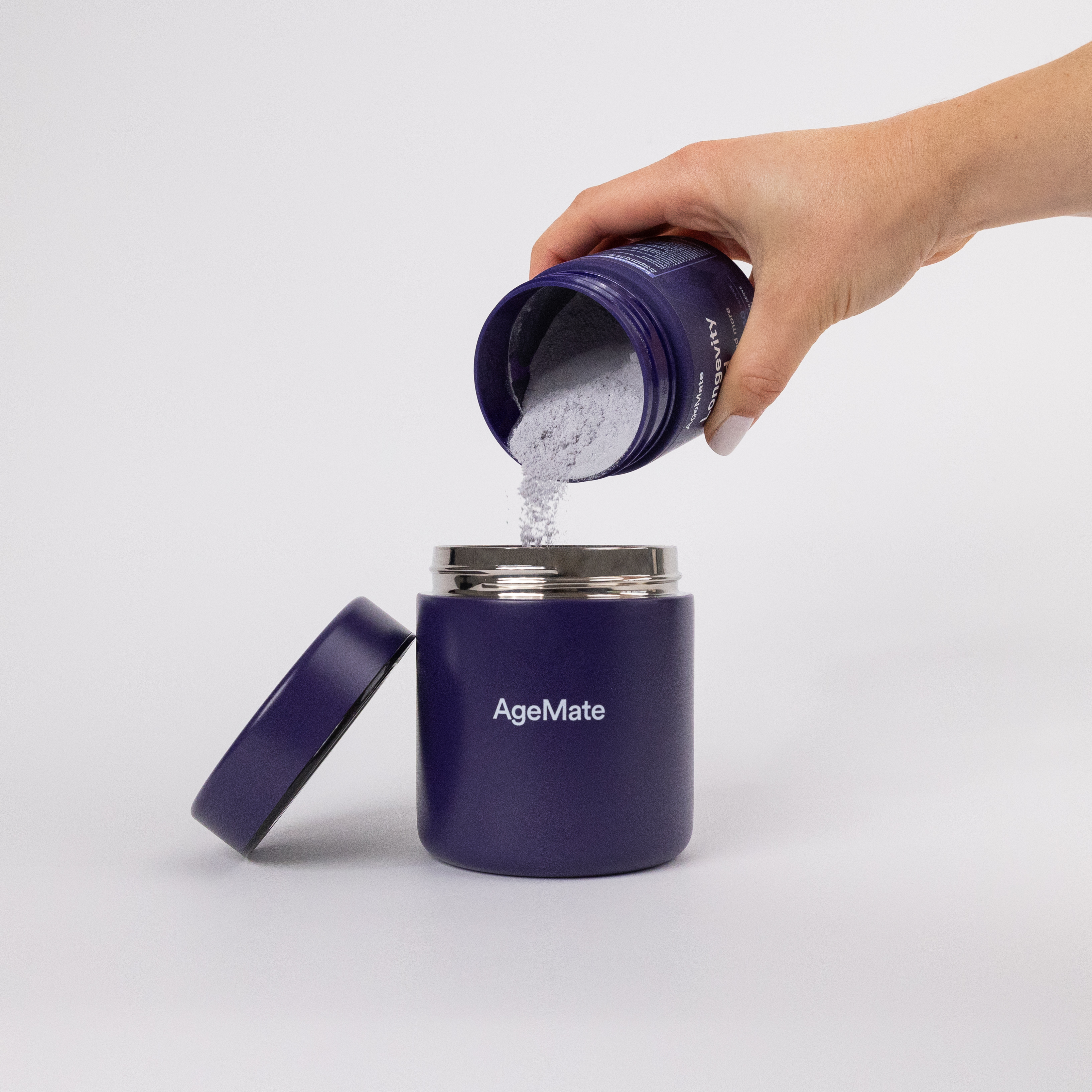
When buying an NMN supplement, focus first on evidence you can verify. Start with clearly identified β-NMN (AgeMate uses β-NMN by CellVive NMN®) and transparent quantities, then look for relevant batch-specific laboratory testing, evidence of identity and purity, manufacturing transparency and suitable packaging.
Human research provides useful context for understanding NMN, including evidence that oral NMN can increase blood NAD concentrations in studied populations. (R) Other outcomes remain an active area of research, and current human studies do not establish that NMN extends human lifespan.
The best NMN is therefore not simply the one with the highest dose, highest advertised purity or biggest longevity promise. A better comparison is based on transparent information, verifiable quality and a clear understanding of what the human evidence does, and does not, show.
Continue learning about the science of healthy ageing and longevity: The Ultimate Guide to NMN